
Why Is My Benchtop Staining? Causes and Fixes

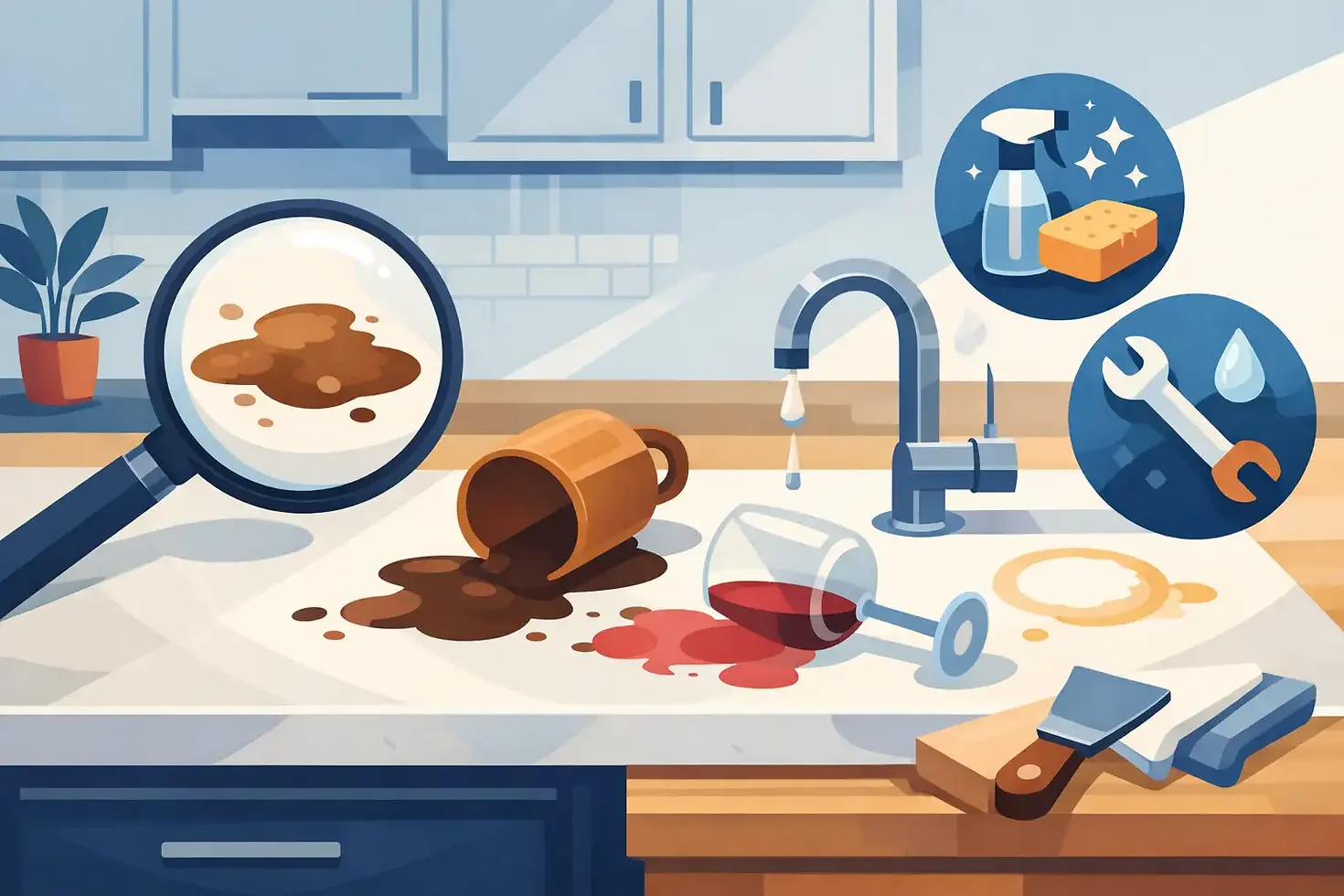
A pale ring beside the sink, a dark patch around the cooktop, or a mark that refuses to lift after cleaning can be worrying on a premium stone surface. If you are asking, “why is my benchtop staining?”, the answer may not be as simple as a spill soaking into the stone. Some marks are true stains, while others are surface damage, residue, heat effects or changes to the finish.
Getting the diagnosis right matters. Using the wrong cleaner or abrasive method can turn a minor mark into a larger, more noticeable repair. The best approach depends on whether your benchtop is engineered stone, marble, granite or another natural stone, as well as the age, finish and location of the mark.
Why is my benchtop staining when I clean it regularly?
Regular cleaning helps, but it cannot always prevent discolouration. Benchtops are exposed to oils, acids, coloured food, cleaning products, standing water and heat every day. A mark can also build up gradually, making it difficult to pinpoint the cause.
Engineered stone products, including many quartz-based surfaces, are generally low-porosity. That makes them highly resistant to everyday staining, but not completely immune to damage or discolouration. Harsh chemicals, concentrated dyes, cooking oils left for extended periods and residue from unsuitable products can affect the resin-bound surface or leave a stubborn film.
Natural stones such as marble and some granites behave differently. They contain minerals and small pores that can absorb liquids, particularly if the protective sealer has worn away. A spill of red wine, turmeric, coffee, oil or cosmetics may darken the stone beneath the surface rather than simply sitting on top of it.
The location provides useful clues. Marks around sinks are often connected with water, mineral deposits, silicone breakdown or cleaner residue. Marks near cooktops may be caused by oil, heat or repeated contact with cookware. A patch around a seam can point to moisture movement, adhesive discolouration or a joint that needs specialist attention.
First, work out whether it is actually a stain
A true stain is a substance that has penetrated or bonded to the surface. It often looks darker than the surrounding benchtop and may have a soft-edged or irregular shape. Oil stains, for example, can create a shadow-like patch on unsealed or poorly sealed natural stone.
Not every dull or pale mark is a stain. Etching is commonly mistaken for staining on marble and other acid-sensitive natural stones. Lemon juice, vinegar, wine and some bathroom products can react with the stone, leaving a lighter, duller or rough-feeling patch. The colour may not have changed much, but the polished finish has been affected.
On engineered stone, a cloudy patch may be residue rather than penetration. Spray cleaners, soap, waxes and products containing oils can leave a film that catches light differently. A white or dull area may also be chemical damage, particularly where strong oven cleaners, drain cleaners, paint removers or highly alkaline products have contacted the surface.
Heat damage is another possibility. Placing a hot pan directly on a quartz-based benchtop can affect the resin component, sometimes creating a pale, yellowed or altered patch. This cannot usually be cleaned away because it is a change within the material rather than a deposit on top.
Common causes of stone benchtop discolouration
The cause is not always obvious, but these are the issues specialists see most often in kitchens and bathrooms.
Food, oil and deeply coloured spills
Cooking oil, curry, beetroot, red wine, coffee and tomato-based sauces can leave marks when spills are left sitting, especially on natural stone. Oil is particularly deceptive because it may not look dramatic at first. Over time, it can create a darkened area around a favourite preparation spot or beside the cooktop.
On engineered stone, the risk is lower, but concentrated colourants and prolonged contact can still cause problems. Avoid leaving wet tea bags, spice jars with residue underneath, or bottles of oil directly on the surface for long periods.
Acid etching on marble and natural stone
Acidic liquids can dull polished marble within minutes. The result is often a lighter spot, a ring from a glass or a patch that feels less smooth than the surrounding stone. This is not a cleaning failure and it is not solved by applying more sealer. The finish has been chemically altered and may require honing and polishing to restore its appearance.
Harsh household cleaners
The cleaner that works well on tiles, ovens or bathroom fittings may be unsuitable for stone. Bleach, strong degreasers, acidic limescale removers, drain cleaner and abrasive powders can damage the polish, alter colour or leave a blotchy finish.
Even when a product does not cause immediate damage, repeated use can leave residue. If your benchtop looks streaky or cloudy after cleaning, the product itself may be contributing to the issue.
Water, mineral deposits and bathroom products
Hard water can leave white, chalky deposits around taps and sinks. These deposits can look like stains but sit on the surface. Soap, shampoo, toothpaste, handwash and cosmetics can create similar marks in bathrooms, especially around the basin.
Water can be more serious where silicone has failed or a seam has opened. Moisture reaching an edge, joint or vulnerable area may lead to persistent darkening in natural stone or visible changes around adhesives. These issues should be assessed before repeated cleaning or sealing attempts conceal the underlying cause.
Worn sealer on natural stone
Sealer does not make natural stone waterproof or indestructible. Its job is to slow absorption and give you time to wipe spills away. Over time, routine cleaning, friction and exposure to water can reduce its effectiveness.
If water darkens a small area of marble or granite and then gradually dries back to normal, the stone may be due for resealing. If the dark patch remains, there may already be absorbed moisture or a stain that needs a more targeted treatment.
What to do when you notice a mark
Start gently. Wipe up any residue with a soft cloth, warm water and a pH-neutral stone cleaner. Dry the area thoroughly, then inspect it in natural light. Do not assume a mark has gone just because it is less visible while wet.
Avoid scrubbing with scourers, steel wool, magic erasers or abrasive cream cleaners. These can scratch or dull polished surfaces, leaving a larger repair area than the original mark. Do not use vinegar, lemon, bleach, oven cleaner or strong bathroom chemicals unless the manufacturer specifically confirms they are suitable for your exact benchtop material.
If you know what caused the mark, take a clear photo before trying multiple products. Photographs showing the full benchtop and a close-up of the affected spot can help identify whether the issue is likely to be staining, etching, chemical damage, heat damage or a finish problem.
It is also worth allowing a wet-looking area to dry fully before deciding it is permanent. Moisture around a sink cut-out, seam or edge can take time to evaporate. However, if the patch is spreading, has appeared after a leak, or is linked to cracked silicone or a loose seam, arrange an inspection promptly.
When cleaning is no longer the answer
A specialist repair is usually the sensible option when a mark remains after appropriate cleaning, the surface has lost its polish, or damage is visible from normal standing height. This is particularly true for etching on marble, chemical damage on engineered stone, burn marks, seam discolouration and stains around damaged sink areas.
Professional restoration is not one single process. A technician may need to remove surface contamination, carefully hone an etched area, polish to match the existing sheen, treat absorbed staining, repair a chip or crack, or renew failed silicone and epoxy lines. The aim is not merely to make the mark less obvious. It is to restore the surface so the repaired area blends naturally with the surrounding benchtop.
There are limits, and a reliable assessment should be honest about them. Deep heat damage, widespread chemical attack and severe staining can require more extensive work than a small surface mark. The stone type, pattern, colour and finish all influence how closely a repair can be matched.
For homeowners across New South Wales, ChipFix Stone Benchtop Repairs assesses these issues on site and focuses on near-invisible restoration where the material and damage allow it. A clear photo and a description of what was spilled or used on the surface are often the best first steps towards an accurate recommendation.
Preventing the next stain or surface mark
Use chopping boards and trivets, wipe spills promptly, and keep acidic or oily products from sitting on the stone. For everyday care, a soft cloth and stone-safe cleaner are usually enough. More product does not mean a cleaner benchtop, and harsh products rarely improve the result.
For marble, granite and other natural stone, have the sealer condition checked when water begins soaking in rather than beading on the surface. In wet areas, keep an eye on silicone around sinks and basins. Replacing failed sealant early can prevent moisture from reaching places it should not.
A benchtop should be enjoyed, not constantly worried over. When a mark will not shift, resist the temptation to experiment with stronger chemicals. A correct diagnosis protects the finish you paid for and gives the best chance of restoring the surface properly.


Comments