

Epoxy Line Replacement Stone Explained
- Stone Cut

- Jul 9
- 6 min read
A darkened join running through an otherwise flawless benchtop is hard to ignore. In many kitchens and bathrooms, the surface itself still looks excellent, but the epoxy line between slabs has yellowed, cracked, lifted or started collecting grime. That is where epoxy line replacement stone repairs make a real difference - not by replacing the whole benchtop, but by restoring the join so it looks cleaner, tighter and more in keeping with the original finish.
For homeowners who have invested in premium stone, this is often the smarter path. A failed seam does not always mean the stone itself has failed. In many cases, the issue sits in the bonding line, the colour match, the original installation method or years of movement and wear.
What epoxy line replacement stone actually means
In stone benchtops, an epoxy line is the adhesive join used where two pieces of stone meet. You will usually see it around long kitchen runs, waterfall ends, island tops or altered sections near sinks and cooktops. When that line is done well, it should sit neat and discreetly within the pattern of the stone. When it is done poorly or begins to deteriorate, it can stand out straight away.
Epoxy line replacement stone work involves removing the failed or discoloured bonding material and replacing it with a fresh line that is better matched, properly prepared and correctly finished. The goal is not just to fill a gap. The goal is to restore the visual continuity of the surface while keeping the join sound.
That distinction matters. A quick patch over the top of old epoxy rarely lasts and often makes the seam more obvious. Proper replacement requires careful removal, surface preparation, colour control and finishing.
Why epoxy lines fail over time
Not every seam issue has the same cause. Some are installation related, while others develop slowly through use. A benchtop can also look fine structurally but still need attention because the join has become visually distracting.
One common problem is yellowing. Lighter epoxy lines can discolour with age, UV exposure or repeated contact with cleaning chemicals. Another is cracking, which may happen if there has been movement in cabinetry, stress near cut-outs or weakness in the original join. In wet areas, staining and grime build-up can become the main concern, especially when the line has opened slightly or was never finished cleanly to begin with.
There is also the issue of colour mismatch. We often see joins that were filled with an epoxy tone that looked close enough on installation day but never really blended with the stone. On a premium surface, that compromise becomes more noticeable over time.
When replacement is better than repair
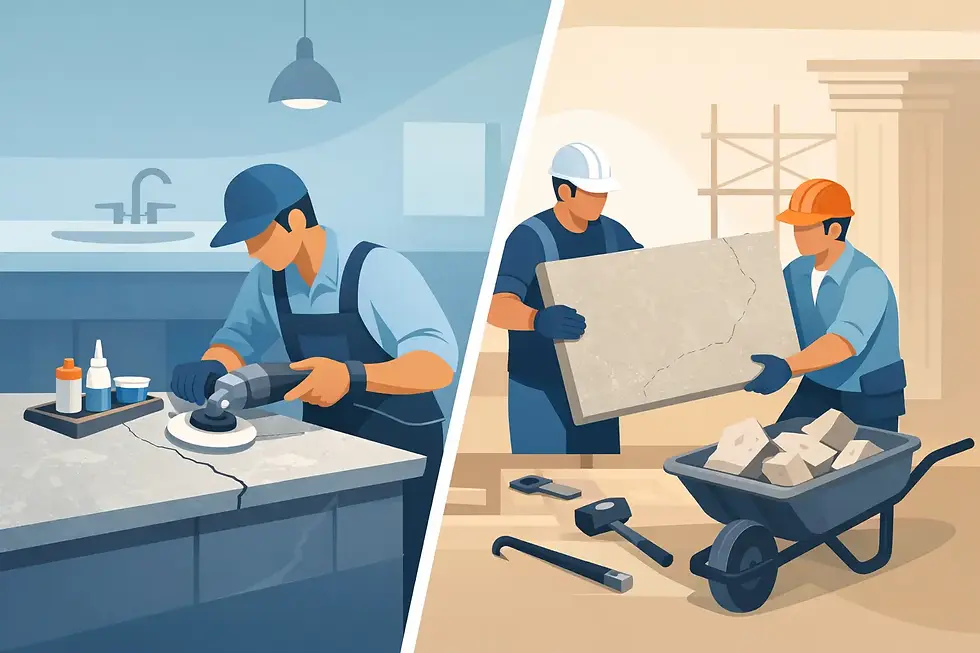
Sometimes a seam only needs minor tidying. Other times, replacement is the right call because the existing line has reached the point where touching it up will not produce a worthwhile result.
If the epoxy has shrunk, pulled away, become patchy or trapped visible dirt within the line, replacement usually gives a cleaner and more durable outcome. The same applies where the join has been repaired before and now shows multiple colours, uneven texture or excess adhesive spread across the stone face.
It also depends on the type of surface. Engineered stone, marble, granite and quartz-based products all behave differently in terms of pattern, porosity and finish. What works for one seam may not suit another. That is why proper assessment matters before any work begins.
The process behind epoxy line replacement stone repairs
Good seam restoration is precise work. The first step is identifying whether the problem is cosmetic, structural or both. If the surrounding slabs are stable and correctly supported, attention can focus on the join itself. If there is movement underneath, that needs to be understood before replacing the epoxy line.
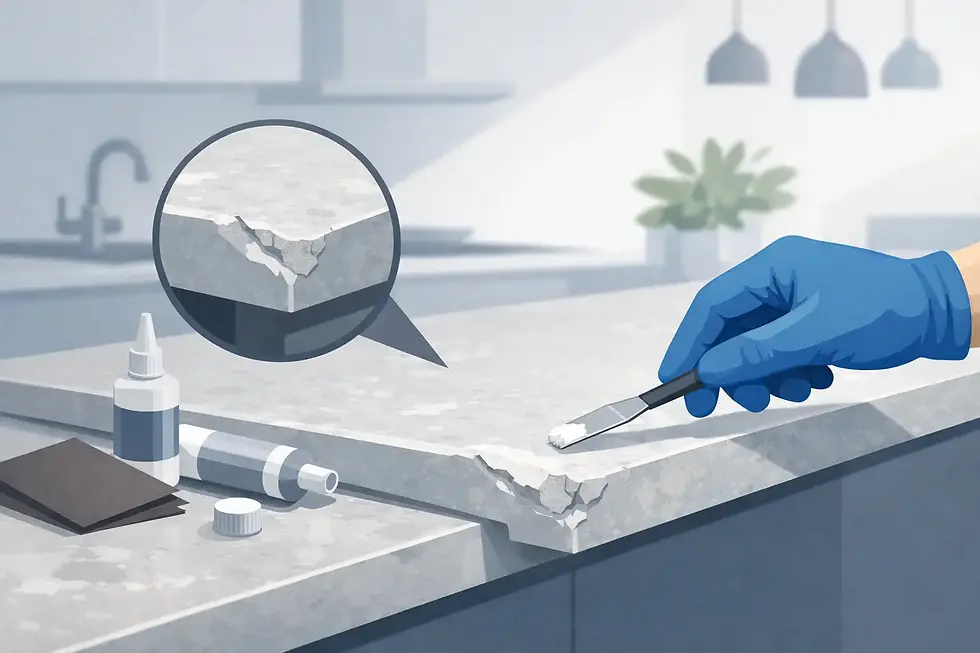
The old adhesive is then carefully removed without chipping the arrises or scarring the surrounding stone. This is one of the most important parts of the job. Rushed removal can turn a seam issue into edge damage, which creates a larger cosmetic repair.
Once the join is clean, the surfaces are prepared for a new bonding line. Colour matching comes next. On plain white stone, this can be deceptively difficult because even slight variation in tone becomes visible. On marble or patterned engineered stone, the challenge shifts to reducing the visual interruption across veining and movement.
After application, the new epoxy line is shaped and finished so it sits neatly with the surrounding surface. Depending on the stone and the seam location, final blending may include refinement of the sheen so the repair does not flash differently under kitchen lighting.
What homeowners should expect from the result
The right expectation is a significantly improved seam that looks neat, professionally finished and far less noticeable. In many cases, the result is close to original in appearance. But stone repair is always about working with what is already installed, and some joins are more forgiving than others.
A narrow, well-positioned seam in a consistent colour will generally achieve the best visual outcome. A wide join through busy veining, previous damage or slab movement can still be improved dramatically, but perfection depends on the starting point. Anyone promising every seam will disappear completely is oversimplifying the work.
What matters most is whether the line stops drawing the eye. For most homeowners, that is the turning point. The benchtop looks right again, the join feels cleaner, and the room no longer appears tired because of one obvious defect.
Why DIY seam fixes often disappoint
Epoxy line repairs look simple until you get close to the detail. Store-bought fillers and generic adhesives rarely match the stone properly, and they do not solve contamination or failed bonding underneath. Even if the colour looks acceptable when wet, it often dries differently and stands out once cured.
There is also the finishing issue. Excess adhesive can leave a haze, scratch marks or a raised edge along the seam. On polished stone, that can be more noticeable than the original problem. On matte or textured finishes, incorrect finishing can create a shiny patch that catches the light.
For premium surfaces, the risk is not only a poor cosmetic result. It is making future professional repair harder because the join has been filled, stained or altered with unsuitable products.
Choosing a specialist for epoxy line replacement stone work
This is not general handyman work. Seam restoration on stone benchtops calls for product knowledge, repair control and experience across both engineered and natural stone. The technician needs to understand how different materials respond, how epoxy behaves over time, and how to finish a join without creating a second problem.
That is especially true with Caesarstone, Smartstone, marble and granite, where colour, reflection and edge detail all affect the final appearance. The difference between an average repair and a high-level one is usually found in preparation and finishing, not just the adhesive itself.
For homeowners in New South Wales, this is where a specialist service matters. ChipFix Stone Benchtop Repairs focuses specifically on restoring visible damage and failed joins on-site, with the sort of technical background that helps avoid guesswork.
Signs your benchtop join needs attention
A seam does not need to be falling apart before it is worth repairing. If you can see the line from across the room, if it has turned yellow or dark, if it feels rough when you wipe across it, or if cleaning never seems to improve it, the join is already affecting the look of the surface.
In wet zones, it is worth acting earlier rather than later. Open or degraded epoxy lines can hold moisture and grime, and that tends to make the issue more pronounced over time. Prompt attention often means a more straightforward restoration.
The same goes for renovated kitchens where cut-outs have been altered for new appliances or sinks. Any added joins should be checked for finish quality, support and visual consistency, particularly on light-coloured stone.
A well-repaired seam can lift the whole benchtop without the cost and disruption of replacement. If the stone still has life in it, restoring the join properly is often the most sensible way to protect the investment and bring the surface back to the standard it should have had all along.

Comments