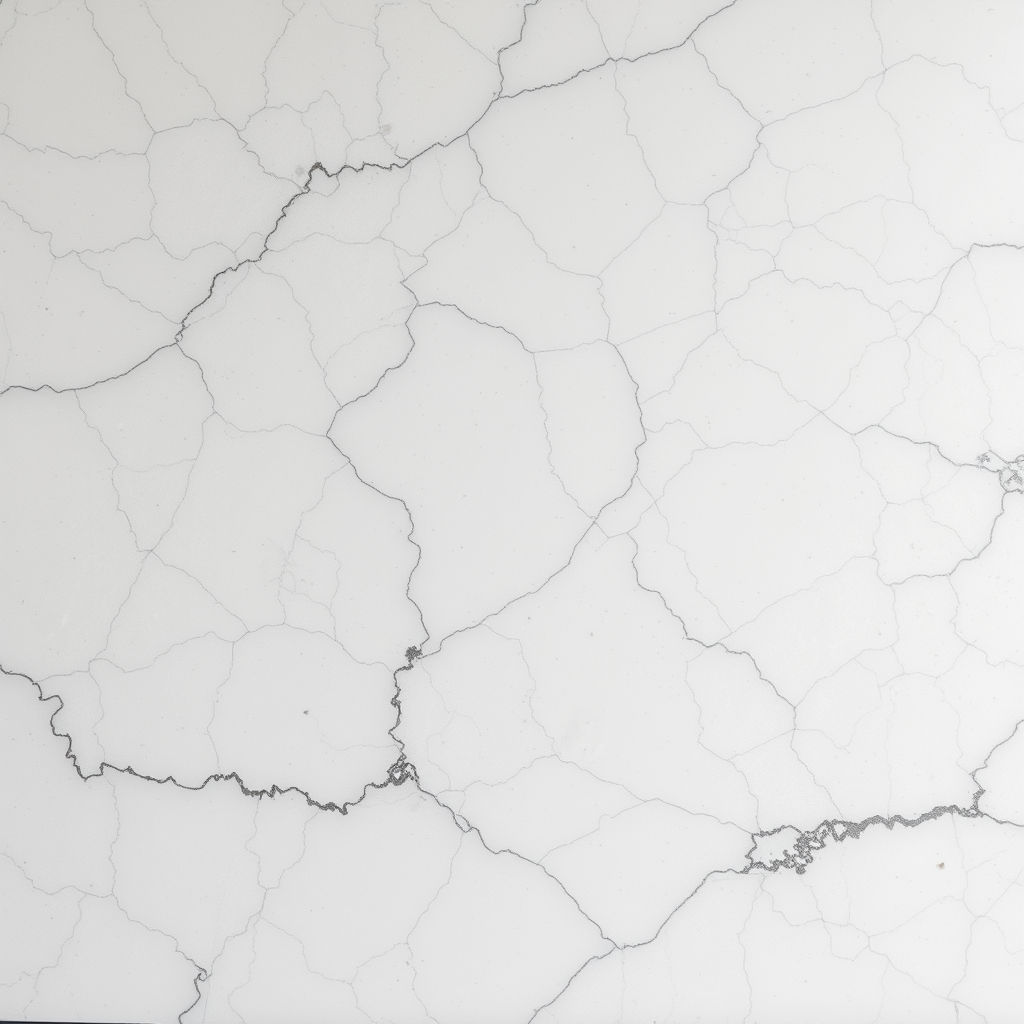

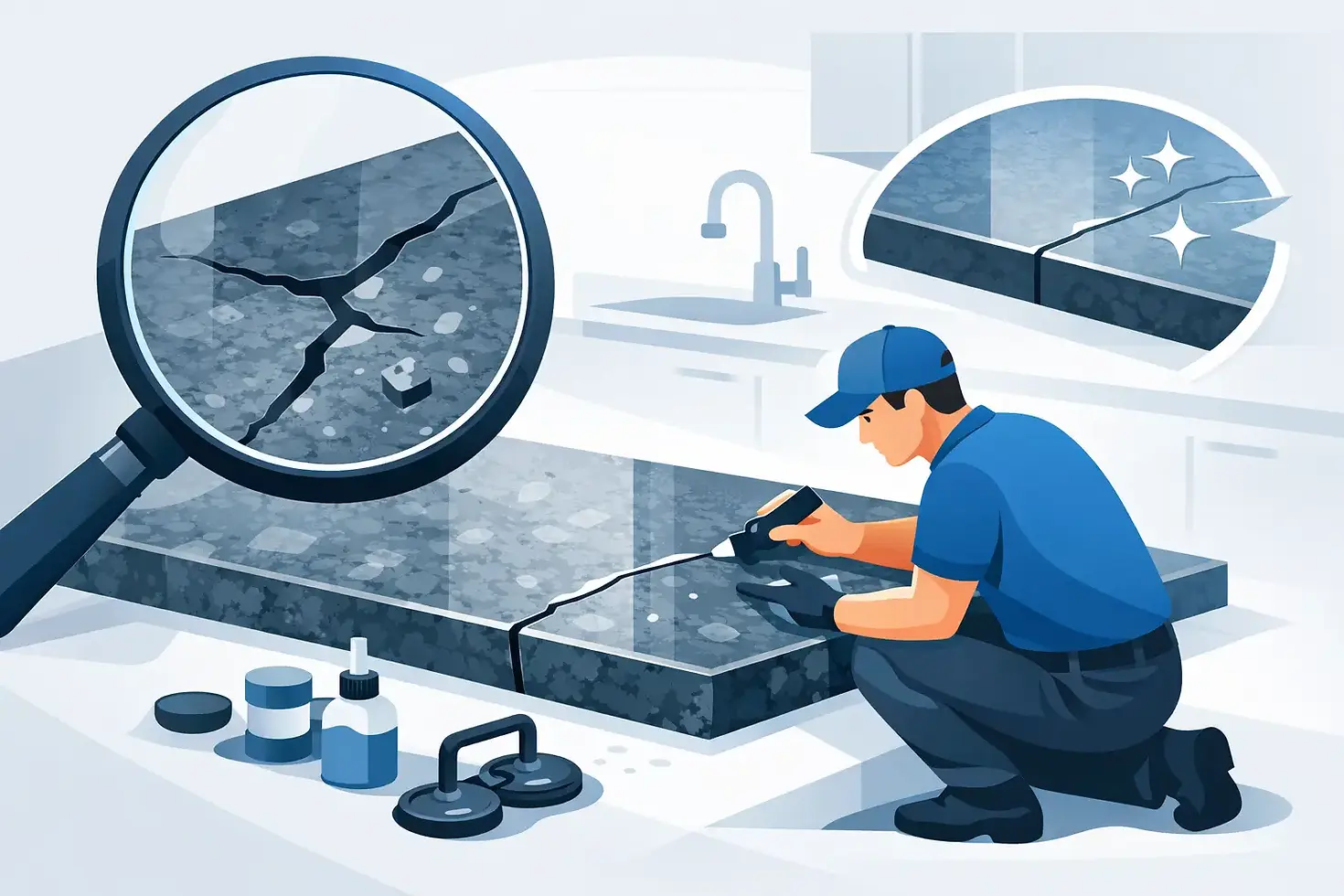
Granite Benchtop Crack Repair Done Right
- Stone Cut

- Jul 2
- 6 min read
A crack in a granite benchtop usually gets noticed at the worst possible moment - when the light hits it just right, when guests are coming over, or when you realise it may be getting worse. The good news is that granite benchtop crack repair is often possible without replacing the entire slab. The key is knowing what type of crack you are dealing with, why it happened, and whether it needs a cosmetic repair, a structural repair, or a more involved restoration.
Granite is one of the toughest natural stone surfaces used in Australian homes, but tough does not mean indestructible. Even premium stone can crack under the wrong conditions. When it does, a rushed DIY fix or a generic handyman approach can leave the damage more visible, not less.
What causes granite benchtop cracks?
Not every crack starts the same way, and that matters because the cause often determines the repair method. Some cracks form from impact. A heavy pot dropped near an edge, a sharp blow around a cut-out, or pressure near a weak point can create a visible fracture. Others develop more gradually due to movement in cabinetry, poor support, seam stress, or existing faults in the slab.
Cooktop and sink cut-outs are common trouble spots. These areas remove strength from the slab and concentrate stress into narrower sections of stone. If the benchtop has any movement underneath, even minor settlement can put pressure on these narrow bridge sections. Over time, that can lead to a crack running from a corner or across a vulnerable span.
Heat can also play a role, though not always in the way people expect. Granite handles heat better than many engineered products, but sudden thermal shock or repeated exposure in already stressed sections can contribute to cracking. If there is a pre-existing weakness, heat may simply be the final trigger rather than the original cause.
Granite benchtop crack repair is not one-size-fits-all
A hairline crack near a sink is a very different job from a full-depth break across an overhang. That is why proper assessment comes first. A repair specialist will usually look at the crack location, length, depth, whether the stone has shifted, and whether the damage is isolated or linked to an installation issue.
Some cracks are largely cosmetic. These can often be stabilised, filled, colour-matched and refined so they blend back into the surface as closely as possible. Others are structural and need reinforcement, rebonding, or correction of the underlying cause before any cosmetic finishing is done. If that step is skipped, the crack can return.
This is where specialist stone repair work separates itself from a patch-up. The aim is not just to fill a line. It is to restore integrity, improve appearance and reduce the chance of the same problem reopening.
When a crack can be repaired
Most homeowners assume a crack means replacement. In many cases, that is simply not true. Granite benchtop crack repair is often a practical option when the stone is still largely intact, the broken sections can be stabilised, and the surrounding benchtop remains sound.
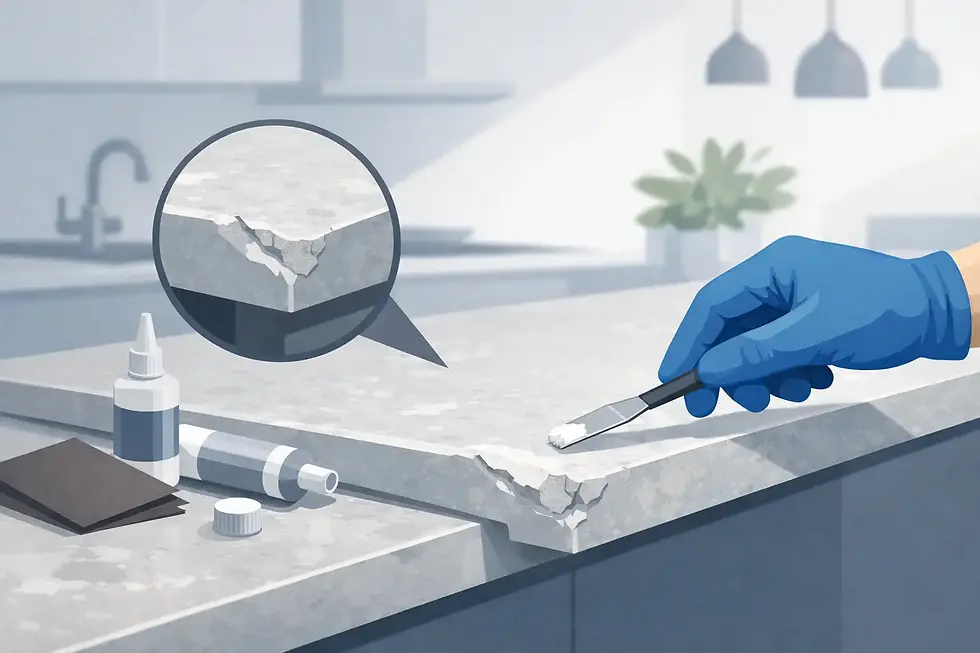
Hairline cracks, edge cracks, seam-related fractures and localised damage around cut-outs are commonly repairable. Even more serious breaks can sometimes be restored if the pieces are present, the movement can be controlled and the repair can be reinforced properly.
What matters most is whether the repair can achieve both visual improvement and lasting performance. A quality repair should not just hide the damage from a distance. It should also bring the area back to a stable, usable condition for everyday kitchen or bathroom use.
When replacement may be the better option
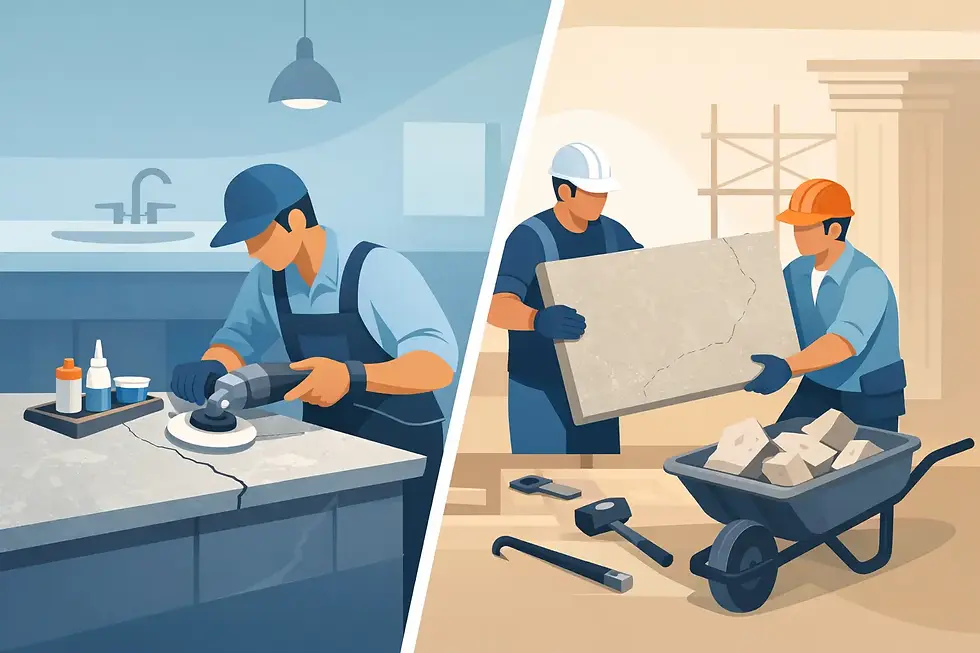
There are cases where repair is not the best investment. If the granite has shattered into multiple unstable sections, if there is major installation failure underneath, or if the slab has widespread structural weakness, replacement may be the more sensible path.
That said, full replacement is often more disruptive and more expensive than people expect. It can involve removing splashbacks, disconnecting plumbing, dealing with appliances and trying to match surrounding surfaces. For that reason, an honest repair assessment is valuable. Sometimes the best outcome is a high-level repair that avoids a complete rip-out. Other times, the right advice is that replacement will give a more dependable long-term result.
What a professional repair usually involves
A proper crack repair starts with stabilising the stone and addressing whatever caused the crack to begin with. If the cabinetry is out of level or the span is unsupported, that should be identified. If the crack is active and moving, the repair has to account for that.
From there, the damaged area is cleaned and prepared. Depending on the crack, specialised resins or adhesives are used to bond and fill the fractured line. The colour and translucency need to be matched carefully, especially in granite where mineral patterning and variation are part of the surface. After curing, the area is refined and polished so the repair sits naturally with the existing finish.
This is skilled work. Granite is not a flat painted surface where any filler will do. The repair has to respect the colour, grain movement, reflectivity and finish of the stone. On darker granites, gloss and shadow can make a repair stand out if it is not handled properly. On lighter or more speckled granites, poor colour matching can be just as obvious.
Why DIY granite crack repairs often disappoint
DIY kits can sound appealing, especially for what looks like a small crack. The issue is that many off-the-shelf fillers are designed for general hard surfaces, not premium natural stone. They may set too visibly, cure with the wrong sheen, or fail to hold if the crack is under stress.
The other problem is diagnosis. What looks minor on the surface may be part of a deeper structural issue. Filling the top without dealing with movement underneath is a short-term fix at best. In some cases, DIY attempts contaminate the crack or make later professional work more difficult.
For homeowners who have invested in a quality stone benchtop, the real goal is usually not to make the crack slightly less obvious. It is to make the damage disappear as much as realistically possible while protecting the benchtop from further failure.
The importance of acting early
Small cracks have a habit of becoming bigger jobs. Water ingress around sinks, pressure from daily use, cleaning chemicals and thermal movement can all worsen a crack once it has opened. Early attention usually gives a specialist more options and a better chance of an excellent visual result.
This is especially true if the crack sits near a sink cut-out, tap hole, cooktop opening or benchtop seam. These are high-stress zones. Leaving them too long can turn a clean repair into a more complex restoration.
If you have noticed a change in the width of the crack, movement when pressure is applied, or slight lipping between the two sides, it is worth having it assessed sooner rather than later.
What to look for in a stone repair specialist
Not all trades handle stone at a specialist level. Granite benchtop crack repair calls for experience with natural stone behaviour, colour matching, polishing systems and structural stabilisation. It also helps to work with a repairer who understands not just surface appearance, but fabrication, installation stresses and why failures occur in the first place.
That level of experience can make the difference between a repair that is merely acceptable and one that is difficult to spot. For homeowners, the practical question is simple: can the technician restore the damage on-site to a finish that respects the value of the original benchtop?
That is the standard we work to at ChipFix Stone Benchtop Repairs. The job is not finished when the crack is filled. It is finished when the repair looks right, feels right and gives you confidence using the surface again.
Before you request a quote
If you are seeking advice on a cracked granite benchtop, clear photos help a lot. A few images from different angles, one close-up of the crack, and one wider shot showing the surrounding area will usually allow a better first assessment. It also helps to mention where the crack is located, whether it has changed over time, and if there was a known impact or installation issue.
That information can save time and make the next step more straightforward. In many cases, a specialist can tell you quickly whether the damage looks repairable, whether an on-site repair is likely, and what level of finish you can reasonably expect.
A cracked granite benchtop does not automatically mean the end of the surface you chose and paid for. Often, it means getting the right hands on the job before a small line turns into a bigger problem.

Comments