

What Invisible Stone Chip Repair Can Achieve
- Stone Cut

- 2 days ago
- 6 min read
A chip on a stone benchtop can draw your eye every time you walk into the kitchen. It may be small, but on a Caesarstone, Smartstone, marble, granite or quartz surface, it can make an otherwise well-kept room feel unfinished. Invisible stone chip repair is designed to change that - restoring the damaged area as closely as possible to the original colour, texture and level without removing the benchtop.
The best repairs are not simply about filling a hole. They rely on correctly identifying the stone, matching its appearance, rebuilding the damaged edge or surface, and finishing it so the repair blends into the surrounding material. When performed properly, a chip can become very difficult to find in normal household lighting.
What makes a stone chip repair look invisible?
No two stone surfaces behave exactly the same way. Engineered stone has a consistent manufactured structure, while natural marble and granite can contain movement, veining, crystals and colour variation. A specialist needs to work with what is already present in the slab rather than apply a generic filler and hope for the best.
A near-invisible result comes from several details working together. The repair material must be colour-matched to the benchtop, but colour alone is not enough. The technician also needs to match the depth of the repair, the sheen of the finish and, where possible, the fine pattern or particulate within the stone. On a polished white quartz benchtop, even a slight change in gloss can show. On dark stone, a repair that is fractionally too light may stand out under overhead lighting.
The location matters too. A small chip on a flat section of bench can often be blended extremely well. Damage to a sharp edge, corner, sink cut-out or waterfall end is more complex because those areas need to look right from more than one angle and withstand regular use.
When invisible stone chip repair is a good option
Most minor chips, pits and edge breaks can be repaired on site. This is often a practical alternative to replacing a full slab, particularly where the rest of the benchtop is in excellent condition. A professional repair can restore the appearance of a surface while helping prevent further deterioration around the damaged spot.
Common repair situations include a chipped front edge caused by a dropped pan, a knocked corner near an island bench, a small impact mark beside the sink, or a tiny piece broken away around a cooktop or tap cut-out. These are the types of defects that can make a premium benchtop look tired long before it needs replacing.
Invisible stone chip repair is also valuable before selling a home, after a renovation accident, or when preparing a rental property for a new tenant. A small repair completed properly can protect the presentation of the kitchen and avoid the cost, disruption and mismatch risk that can come with sourcing replacement stone years after installation.
The repair process on site
A quality repair starts with assessment. The technician checks the stone type, the size and depth of the chip, its position, and whether there are related issues such as a crack, loose seam, movement around the sink or moisture damage. A simple chip is one thing. A chip caused by structural movement may need a different repair approach to ensure the result lasts.
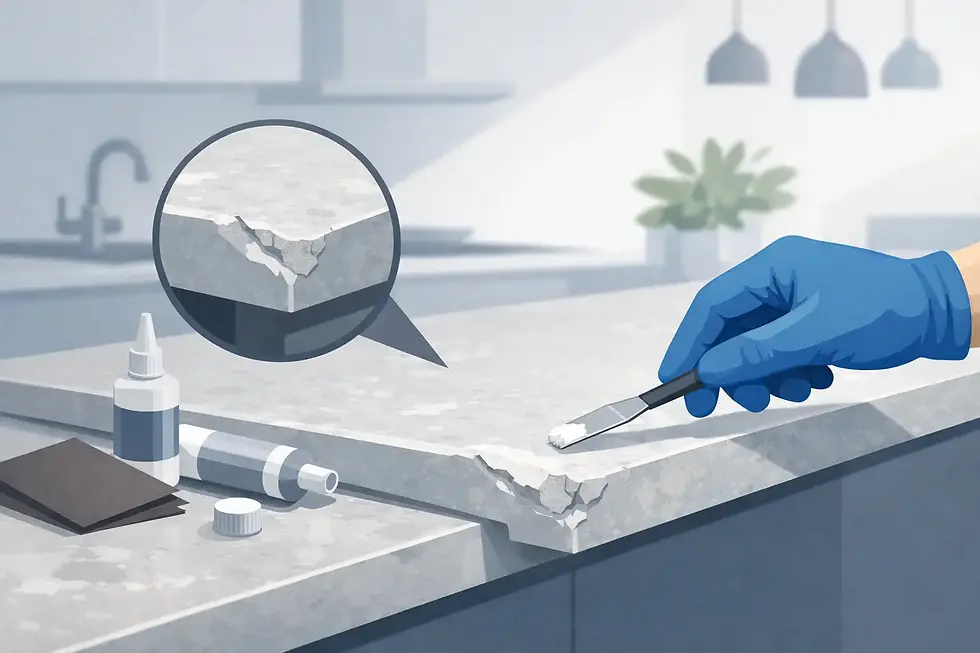
The damaged area is then carefully prepared. Loose or weak material is removed, and the surface is cleaned so the repair compound can bond correctly. Depending on the stone and defect, a specialist may build the area back in fine stages rather than use one oversized fill. This gives better control over shape, strength and colour.
Colour matching is where experience becomes especially visible. The repair material may need to be tinted and adjusted until it sits naturally within the surrounding stone. For engineered products, the technician considers the base tone and fleck pattern. For marble or granite, they may need to work around natural movement and variation rather than try to create an unnaturally uniform patch.
Once cured, the repair is shaped and refined to follow the benchtop’s original profile. The final finish is adjusted to suit the surface, whether that is polished, honed, matt or lightly textured. The aim is a repair that feels smooth, sits level and does not immediately catch the eye.
What affects the final result?
Homeowners understandably want a repair to disappear completely. In many cases, particularly with small chips in consistent engineered stone, the result can be exceptionally hard to detect. However, a responsible specialist will explain that “invisible” describes the intended visual outcome, not a promise that every repair will be impossible to locate under close inspection.
The final result depends on the size of the damage, the stone’s colour and pattern, the chip’s location, and the existing condition of the benchtop. Plain white, black and high-gloss surfaces can be less forgiving because they reveal small changes in colour or reflection. Heavily veined marble may conceal a repair well from a normal viewing distance, yet matching a distinctive vein exactly can be more involved.
Large missing pieces, deep fractures and damage on exposed corners can still be restored to a high standard, but they require realistic expectations. A specialist repair is about achieving the best possible blend while restoring the edge’s shape and day-to-day durability.
Avoid the quick DIY fix
Off-the-shelf repair kits may appear convenient, but they rarely deliver the colour match or finish needed on premium stone. A clear resin can yellow over time, a white filler can look flat against quartz, and poorly prepared material may chip out again. Sanding or polishing the wrong way can also leave a dull patch larger than the original damage.
The risk is not only cosmetic. Benchtop edges and cut-outs are high-use areas. If a repair fails, moisture, cleaning products and further knocks can worsen the problem. Attempting a DIY repair may also make a later professional restoration more time-consuming, as old filler must be removed without damaging the surrounding surface.
For minor damage, it is sensible to avoid using the affected spot until it has been assessed. Do not pick at a loose edge, apply household glue, or scrub the chip with abrasive pads. Keep the area clean and dry, take clear photos in natural light, and note the stone brand if you know it. These details help a repair specialist provide accurate advice before attending.
Chips can point to a bigger benchtop issue
Not every break is an isolated accident. A chip beside a sink may be caused by a heavy impact, but it can also be associated with poor support, movement in the cabinetry or a stressed cut-out. A crack along a join may indicate a seam issue rather than simple surface damage. In these cases, filling the visible mark alone is not the full solution.
A proper assessment considers the surrounding area. The technician may recommend seam rejoining, crack stabilisation, silicone replacement or a carefully planned alteration around an appliance or sink. Addressing the cause as well as the visible defect gives the repair a better chance of lasting.
This is particularly relevant for older kitchens and bathrooms, where sealants can break down and cabinetry can settle. It also matters after new appliances have been installed, as changes around cooktops, taps and sinks can place pressure on stone that was originally cut for different fittings.
Choosing a specialist for stone benchtop repairs
Stone repair is a specialist trade. Look for a business that works specifically with engineered and natural stone, can explain the likely result honestly, and has experience with the type of damage you have. Clear photographs of the chip, including a wider image showing its position, are usually the best starting point for an assessment.
ChipFix Stone Benchtop Repairs combines on-site restoration with specialised knowledge of Caesarstone, Smartstone, marble, granite and quartz-based surfaces. Founder Len Ducrou’s former role as NSW Technical Manager for Caesarstone Australia and factory training in Israel bring valuable technical understanding to complex engineered stone repairs.
A good repair should leave you looking at your kitchen again, not at the damage. If a chip is bothering you each time you use the bench, having it assessed early is often the simplest way to restore the finish you invested in.


Comments