

Repairing Chips in a Caesarstone Benchtop
- Stone Cut

- Jul 26
- 6 min read
A small chip on a pale Caesarstone island can catch the light every time you walk into the kitchen. On a darker colour, it may look like a bright speck against an otherwise flawless surface. Chips in a Caesarstone benchtop are frustrating, but they do not automatically mean replacement is required. In many cases, a skilled on-site repair can rebuild the damaged edge or surface and blend it back to a near-original finish.
The right result depends on the location, size and shape of the damage, as well as the benchtop colour and finish. A clean chip on an exposed edge is very different from a fractured section beside a sink cut-out. Understanding that distinction helps you protect the stone and choose the appropriate repair.
Why Caesarstone Benchtops Chip
Caesarstone is an engineered stone surface made primarily from natural quartz, combined with resins and pigments. It is hard-wearing and well suited to busy kitchens and bathrooms, but no benchtop is completely immune to impact damage.
Most chips happen on exposed edges. A dropped saucepan, ceramic serving dish, glass bottle or heavy appliance can strike a square edge with enough force to remove a small piece of material. Sink and cooktop cut-outs are also more vulnerable because the stone has been cut away and may have narrower sections around the opening.
Damage is not always caused by one dramatic impact. A benchtop can develop a small break where an unsupported overhang has been repeatedly leaned on, where a dishwasher door has knocked the underside of an edge, or where an existing hairline crack has been allowed to spread. Poorly fitted appliances, movement in cabinetry and failed seams can place additional stress on the stone.
A chip should be assessed rather than dismissed as cosmetic. What appears to be a small surface blemish can sometimes reveal a deeper fracture or a weak point around a cut-out. Early repair is usually simpler, cleaner and less noticeable than waiting until more material breaks away.
Can Chips in a Caesarstone Benchtop Be Repaired?
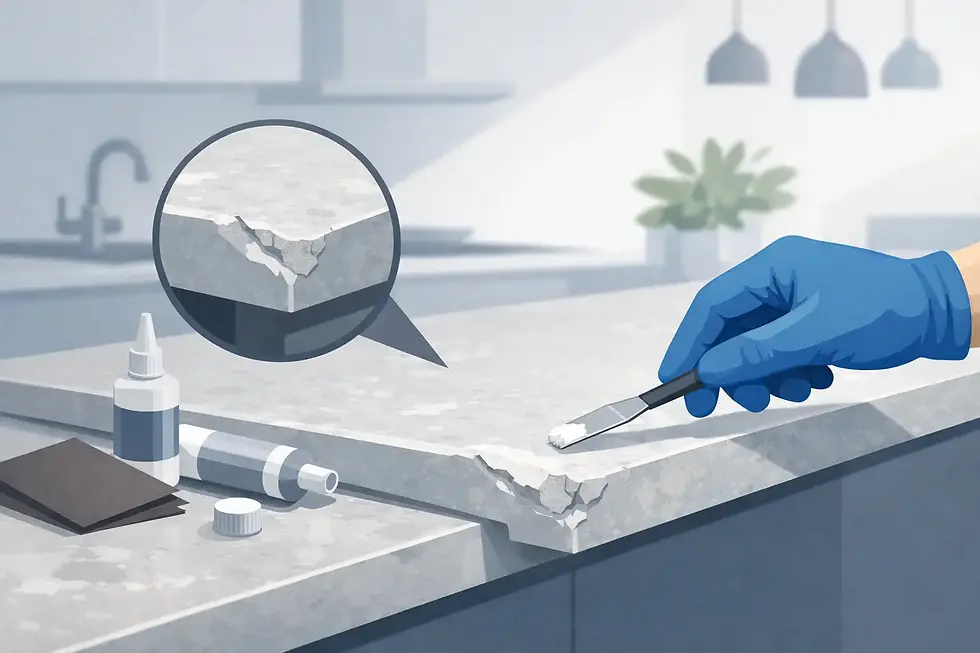
Yes, most minor to moderate chips can be repaired. The aim is not simply to fill a hole with a generic adhesive. A proper stone repair involves preparing the damaged area, rebuilding the lost section with colour-matched material, shaping the profile accurately and refining the surface so it sits naturally with the surrounding benchtop.
For a small chip on a flat surface, a repair may be subtle enough that it is difficult to find without knowing where to look. Edge repairs can also achieve an excellent visual result, although the final appearance depends on the profile, colour, pattern and lighting. Gloss finishes, solid dark colours and prominent waterfall edges demand particular care because they show variations more readily.
A repair specialist will first check whether the damage is isolated. If there is cracking beneath the chip, movement in the benchtop, a loose section, or a failing seam nearby, the underlying issue needs attention as part of the job. Filling over an unstable area may improve its appearance briefly, but it will not provide a durable result.
What a Professional Chip Repair Involves
The repair process starts with careful cleaning and inspection. Oils, cleaning residues and loose fragments must be removed so the repair material can bond correctly. Where practical, the damaged edges are stabilised and prepared to create a secure base.
The repair material is then custom tinted to suit the individual Caesarstone colour. This is where experience matters. Caesarstone designs vary from clean, uniform whites through to veined and speckled patterns, so a close match often requires more than selecting one premixed colour. The technician considers the stone’s base tone, flecks, translucency and level of sheen.
Once the material has cured, it is shaped by hand to restore the edge line, corner, bevel or surface plane. The area is progressively refined to match the existing finish as closely as possible. This work is completed on site, avoiding the disruption and cost of removing an otherwise sound benchtop.
At ChipFix Stone Benchtop Repairs, this approach is backed by specialist experience in engineered stone, including founder Len Ducrou’s former role as NSW Technical Manager for Caesarstone Australia. That knowledge is particularly valuable when assessing whether a mark is a straightforward chip, a crack, a seam issue or a sign of stress in the installation.
When a Chip Needs More Than a Fill
Some damage requires a broader repair strategy. A chip beside a sink may be accompanied by a crack running into the cut-out. A break on a breakfast bar can indicate insufficient support underneath. If a section has come away at a join, the seam may need rejoining before the cosmetic repair is completed.
Larger missing corners can often still be rebuilt, but expectations should be realistic. The goal is a strong, tidy and near-invisible restoration, not the replacement of a whole slab. Patterned stone, heavily veined designs and areas that receive direct sunlight may retain a slight variation on close inspection. A good repair is judged from normal viewing distance as well as by touch, not only under a mobile torch held centimetres from the surface.
Replacement becomes more likely where there is extensive cracking, major structural movement, widespread heat damage or a large broken area that cannot be reliably supported. Even then, a specialist assessment can clarify whether a local repair, seam repair or partial alteration may avoid replacing the entire benchtop.
Avoid These DIY Fixes
It is tempting to use a hardware-store epoxy or a general-purpose repair kit, especially when the chip is small. The risk is that the wrong product can dry yellow, shrink, sit proud of the surface or leave a dull patch that is more obvious than the original damage. Removing a failed DIY repair can also add time and complexity to the eventual professional work.
Avoid sanding the chipped area with abrasive paper, using a sharp blade to level filler, or attempting to polish it with an aggressive compound. Caesarstone finishes are factory produced and can be difficult to replicate after uneven abrasion. A glossy section can quickly become cloudy, while a matt or honed finish may develop a shiny spot.
Do not rely on silicone as a stone repair material. Silicone is useful in the correct places around sinks and splashbacks, but it is flexible and not designed to rebuild a chipped edge. Likewise, do not place excessive weight on a damaged overhang until the area has been checked, particularly if cracking is visible.
How to Protect a Repaired Benchtop
After a chip repair, normal day-to-day use can continue, but a few habits will help preserve both the repair and the surface around it. Use a chopping board rather than cutting directly on the benchtop, and avoid dropping heavy cookware onto exposed edges. Take care when moving appliances, especially near corners and cut-outs.
Use mild cleaning products and a soft cloth for routine care. Harsh abrasives, strongly alkaline cleaners and scouring pads can affect the finish over time. If a sink, cooktop or appliance has begun to move, or if silicone lines are peeling away, arrange attention before moisture and movement create a larger stone issue.
It is also worth checking the source of the original damage. If a chip occurred where a cupboard door repeatedly strikes an edge, adjust the hinge or install a suitable buffer. If an appliance is rubbing against the benchtop, correcting the clearance may prevent the repair from being tested again.
Getting an Accurate Repair Assessment
Clear photos are the best starting point for a chip repair assessment. Take one close image of the damage, one from further back to show its position, and a side angle if the chip is on an edge. Include the colour name if known, along with details of any cracking, movement, previous repairs or nearby sink and cooktop cut-outs.
Natural daylight photos are helpful, but do not worry if the damage is hard to capture. A specialist can assess the likely repair approach from images and confirm the condition on site. The key is to act before a small chip becomes a larger break, particularly around a sink, seam or unsupported edge.
A damaged Caesarstone benchtop does not have to remain the first thing you notice in the room. With the right diagnosis and careful restoration, the focus can return to the kitchen or bathroom you invested in, rather than the chip you wish was not there.


Comments